A resource for understanding cr…
What Does a Credit Card Skimmer Look Like?
This guide helps individuals understand credit card skimmers and offers tips for detection and prevention.
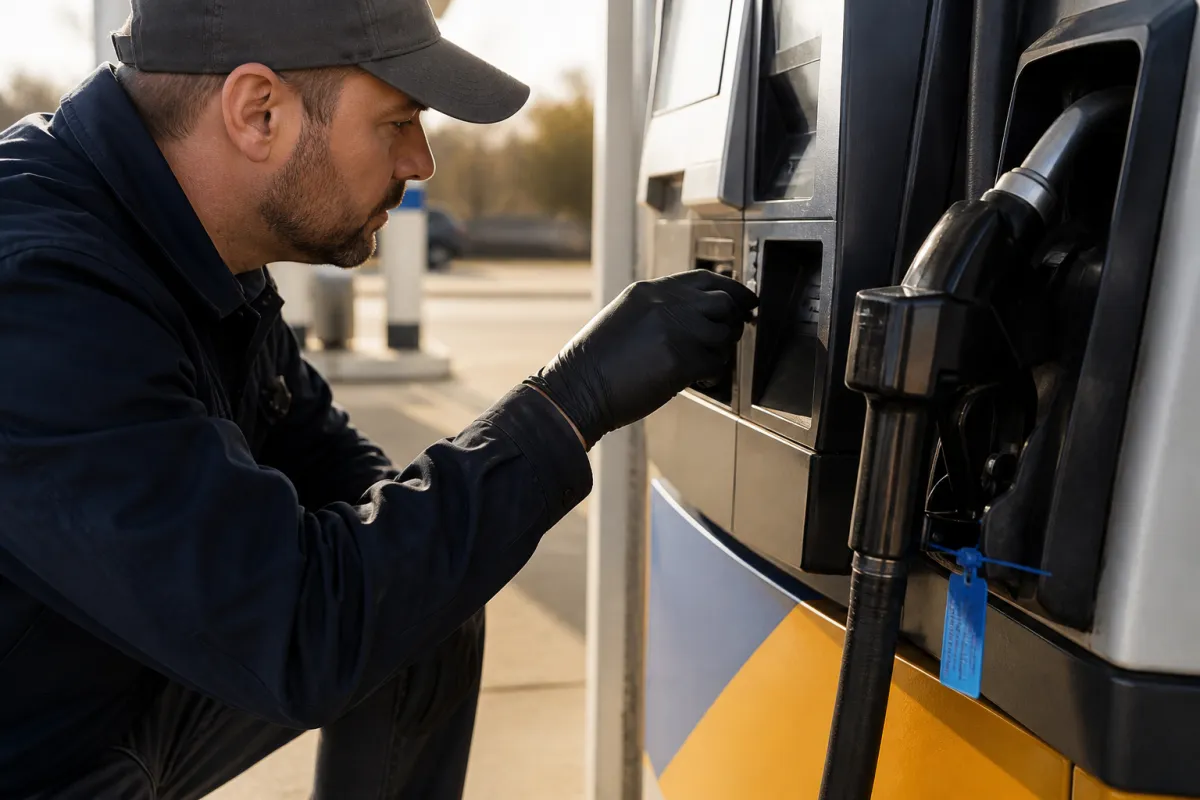
Learn how to identify credit card skimmers at gas stations.
Navigate
- What Is a Credit Card Skimmer?
- Common Features of Credit Card Skimmers
- How to Recognize Skimmers at ATMs
- Identifying Skimmers at Gas Stations
- Signs of a Skimmer on Point-of-Sale Devices
- Advanced Techniques to Spot Skimmers
- What to Do If You Suspect a Skimmer
- Emerging Trends in Skimming Technology
- Checklist for Spotting Skimmers
- Checklist for Identifying Credit Card Skimmers
- Common Mistakes and Misconceptions
- Conclusions
- Links and references
A credit card skimmer typically resembles a standard card reader but may have subtle differences. Common indicators include a slightly wider or misaligned card slot, unusual attachments on ATMs or fuel pumps, and loose or poorly fitted components. Regularly inspect devices at points of sale, especially in high-risk areas like California, which has the highest skimming incidents.
What Is a Credit Card Skimmer?
A credit card skimmer is a device that illegally captures data from credit and debit cards during transactions. These devices can be attached to various points of sale, such as ATMs, gas pumps, and retail card readers, allowing criminals to steal card information without the user's knowledge. The primary purpose of a skimmer is to facilitate identity theft and financial fraud by collecting sensitive data, including card numbers and PINs.
The prevalence of credit card fraud is alarming. In the first half of 2023, incidents of card skimming increased by 20% compared to the previous year, compromising approximately 120,000 cards (1). Financial institutions and consumers together bear the burden of over $1 billion in losses annually due to skimming (2). The average number of cards affected per skimming incident rose by 48% in 2023, indicating that each event is becoming more damaging (1). Notably, bank ATMs reported a staggering 109% increase in skimming incidents year-over-year during the same period (1).
In addition to the rise in skimming incidents, the rate of payment card fraud has increased by 22%, marking the highest rate recorded since 2018 (3). This trend is not limited to the United States; for instance, in Australia, counterfeit and skimming fraud escalated by 8.5% to $7.7 million in 2023 (3). The growth of skimming techniques, including the use of Bluetooth-enabled devices, further complicates the landscape of financial security.
To mitigate the risks associated with skimming, consumers are encouraged to be vigilant and adopt preventative measures. For example, covering the keypad while entering a PIN can thwart hidden cameras that some skimmers employ (4). Understanding what a credit card skimmer looks like and how it operates is crucial for effective fraud prevention.
Common Features of Credit Card Skimmers
Credit card skimmers are designed to blend in with legitimate card readers, but they often exhibit certain characteristics that can help identify them. Commonly, skimmers are made from plastic and can vary in size, typically ranging from 3 to 5 inches in length. They may be slightly thicker than standard card readers, which can be an immediate red flag. The colour of skimmers often matches the surrounding device, making them less conspicuous; however, they may also show signs of wear or unusual markings that differentiate them from authentic equipment.
A prevalent type of skimmer is the ATM skimmer, which can be affixed over the card slot of an ATM. These devices may have a card slot that appears misaligned or wider than normal, allowing them to capture card data more effectively. Gas pump skimmers often have a similar design and may include additional components that capture PINs, such as fake keypads placed over the original. Bluetooth skimmers, on the other hand, can be more discreet, as they may not require any visible external features and instead transmit data wirelessly to the fraudster.
To illustrate, consider a scenario where a skimmer is installed on a POS terminal. The device may look almost identical to the original card reader, except for slight misalignments or an unusual texture. An effective method to identify a skimmer is to compare the card reader to others in the vicinity; discrepancies in size or alignment can indicate tampering (5).
Awareness of these features is vital for consumers. Regular inspection of card readers, especially in high-risk areas, can significantly reduce the chances of falling victim to skimming. Reporting any suspicious devices or behaviours to authorities can also aid in fraud prevention efforts. Understanding the common features of credit card skimmers is an essential step in safeguarding personal financial security.
How to Recognize Skimmers at ATMs
Identifying skimmers at ATMs requires vigilance and attention to detail. Look for several specific signs that may indicate the presence of a skimming device. One of the first things to check is the card reader itself. If the card slot appears loose, misaligned, or wider than usual, it could be a sign that a skimmer is attached (5). A properly functioning ATM should have a snug fit for cards, so any irregularities should raise suspicion.
Additionally, observe the colour and texture of the card reader. Skimmers are often designed to match the ATM's original components, but they may have a slightly different hue or finish. If the card reader exhibits unusual wear or inconsistencies in colour compared to the surrounding equipment, this could indicate tampering. Pay attention to the angles as well; a skimmer may be installed at an unusual angle that does not align with the rest of the ATM.
Loose parts around the ATM are another indicator of potential skimming devices. If the card reader or any surrounding components feel wobbly or poorly fitted, this could suggest that a skimmer has been added. It is essential to conduct a thorough visual inspection before using any ATM, especially in high-risk areas, where skimming incidents have increased significantly, such as California, which reports three times the number of skimming incidents compared to other states (1).
While these signs are crucial, additional measures can enhance protection against skimming. Covering the keypad while entering a PIN can help prevent hidden cameras from capturing sensitive information (4). Furthermore, using contactless payments, when available, may reduce the risk of skimming, as these transactions generate unique codes for each use, making data capture more challenging for fraudsters (6). Being aware of these indicators and taking proactive steps can significantly reduce the risk of falling victim to credit card fraud.
Identifying Skimmers at Gas Stations
Skimmers are frequently found on gas pumps, where they can be deceptively placed to capture card information during fuel transactions. These devices can often be attached over the legitimate card reader, making them difficult to detect at a glance. When approaching a gas pump, it is essential to conduct a thorough inspection to safeguard against potential fraud.
One of the first steps is to check for security seals on the pump. Most legitimate gas stations use tamper-proof seals that should remain intact. If a seal appears broken or missing, it may indicate that a skimmer has been installed. Additionally, inspect the physical integrity of the pump. A gas pump that feels loose or has components that do not fit together tightly could be a sign of tampering. Pay attention to any unusual attachments or modifications around the card reader area. A skimmer may present as a slightly wider card slot or an irregularly shaped device that does not match the pump's original design.
It is also advisable to compare the card reader with those on other nearby pumps. If discrepancies are noted, such as a misaligned card slot or a different texture, this may suggest the presence of a skimmer (5). In high-risk areas, particularly where skimming incidents have surged, such as California, these checks become even more critical (1).
Using contactless payment methods can further reduce the risk of skimming, as these transactions generate unique, one-time codes that are harder for fraudsters to exploit (6). When using a card, covering the keypad while entering a PIN is another effective strategy to protect against hidden cameras that some skimmers utilise (4).
Regular vigilance and proactive measures are essential for consumers to mitigate the risks associated with gas pump skimmers. Reporting any suspicious devices or behaviours to the gas station management can contribute to broader fraud prevention efforts. Understanding these identification techniques is crucial for maintaining financial security at gas stations.
Signs of a Skimmer on Point-of-Sale Devices
Skimmers can be attached to point-of-sale (POS) systems in retail environments, often designed to blend seamlessly with legitimate card readers. Identifying these devices requires careful observation of the card reader's features and surroundings. One common sign of a skimmer is the presence of overlapping devices; for instance, a skimmer may be affixed over the original card reader, making it appear thicker or misaligned. If the card slot looks wider than usual or if there are any unusual protrusions, this may indicate tampering (5).
Unusual placements of components can also signal the presence of a skimmer. For example, if a card reader has a texture or colour that feels different from the surrounding equipment, or if it seems to be angled incorrectly, these discrepancies warrant further investigation. Regular inspections of devices, particularly in high-risk areas such as California, which experiences three times the number of skimming incidents compared to other states (1), can significantly reduce the risk of falling victim to credit card fraud.
In addition to visual cues, operational anomalies may suggest the presence of a skimmer. For example, if the card reader is unresponsive or requires excessive force to insert a card, this could indicate that a skimmer has been installed. Consumers should also be cautious of any loose or wobbling parts around the card reader, as these can be indicators of tampering (2).
To enhance safety while using POS devices, consumers are encouraged to adopt preventative measures. Covering the keypad while entering a PIN can protect against hidden cameras that some skimmers utilise (4). Additionally, opting for contactless payment methods, when available, can help mitigate the risk of skimming, as these transactions generate unique codes for each use, complicating data capture for fraudsters (6). Awareness of these signs and proactive measures are essential for safeguarding personal financial security in retail environments.
Advanced Techniques to Spot Skimmers
Identifying credit card skimmers requires more than basic visual inspections. Advanced techniques can enhance detection and provide consumers with better protection against potential fraud. One effective method is using a smartphone to detect Bluetooth signals that skimmers may emit. Many Bluetooth-enabled skimming devices transmit data wirelessly, and apps designed to scan for Bluetooth devices can help identify unusual signals nearby. It is advisable to regularly check for unfamiliar devices when using ATMs or gas pumps, as skimmers often remain hidden from plain sight.
Another critical technique involves checking for hidden cameras. Skimmers may employ miniature cameras to capture PIN numbers while users enter them. To mitigate this risk, consumers should cover the keypad with their hands while entering their PIN. This simple yet effective action can prevent hidden cameras from recording sensitive information (4). Additionally, inspecting the area around the card reader for any unusual objects or attachments can also reveal potential hidden cameras.
Conducting periodic checks on card readers is essential, especially in high-risk locations. For example, when at an ATM or gas pump, comparing the card reader with others in the vicinity can help identify discrepancies. A skimmer may appear slightly wider, misaligned, or have different textures compared to legitimate equipment (5). Regular use of contactless payment options can further reduce the risk of skimming, as these methods generate unique transaction codes that are less susceptible to data capture (6).
Implementing these advanced detection techniques can significantly enhance consumer awareness and contribute to overall fraud prevention efforts. Staying vigilant and proactive in identifying potential skimmers will help safeguard personal financial security against the increasing threat of credit card fraud.
What to Do If You Suspect a Skimmer
If a skimmer is suspected, immediate action is crucial to protect personal information and reduce potential losses. The first step is to avoid using the compromised card reader. Instead, consider using an alternative payment method or finding another ATM or gas pump. This is particularly important given the 20% increase in skimming incidents in 2023, which has compromised approximately 120,000 cards (1).
Next, report the suspected skimmer to the relevant authorities. This includes notifying the management of the establishment where the skimmer was found, as they may be unaware of the device's presence. Additionally, contacting local law enforcement can aid in the investigation and removal of the skimmer. For immediate assistance, consumers should also reach out to their bank or credit card issuer to report the incident. Most banks have dedicated fraud departments that can provide guidance on the next steps and monitor accounts for any suspicious activity. Contact details for major banks can typically be found on their websites or on the back of the card.
Furthermore, it is essential to monitor bank statements and account activity regularly. Consumers should look for any unauthorised transactions and report them to their bank immediately. According to the Nilson Report, fraud losses related to cards issued in the US reached $14.32 billion in 2023 (7), highlighting the importance of vigilance.
In addition to reporting, individuals should take preventive measures to safeguard their information. Covering the keypad while entering a PIN can protect against hidden cameras that some skimming devices use (4). Opting for contactless payment methods, when available, may also reduce the risk of skimming, as these transactions generate unique codes that are difficult for fraudsters to exploit (6).
By taking these steps, individuals can effectively mitigate the risks associated with credit card skimming and contribute to broader fraud prevention efforts.
Emerging Trends in Skimming Technology
Recent advancements in skimming technology have led to an alarming rise in incidents, making it crucial for consumers to stay informed. In the first half of 2023, card skimming incidents increased by 20% compared to the same period in 2022, with approximately 120,000 cards compromised (1). This trend underscores the need for heightened awareness and vigilance, as skimming now costs financial institutions and consumers over $1 billion annually (2).
One notable evolution in skimming technology is the increasing sophistication of devices. For instance, the average number of cards impacted per compromise event surged by 48% in 2023, indicating that skimmers are now capable of capturing larger volumes of data in single incidents (1). Additionally, bank ATMs experienced a staggering 109% increase in skimming incidents year-over-year during the first half of 2023 (1). This suggests that criminals are not only enhancing their hardware but also exploiting vulnerabilities in existing systems more effectively.
Emerging malware, such as Prilex, poses further challenges by blocking contactless payments. This forces users to insert cards, facilitating the data capture process for fraudsters (8). The rise of Bluetooth skimmers adds another layer of complexity, as these devices can transmit data wirelessly, making them harder to detect. Consumers should be aware of the potential for these technologies to evolve and adapt, creating new challenges in fraud prevention.
To mitigate these risks, it is essential to remain informed about the latest trends in skimming technology. Regularly checking for signs of tampering, such as misaligned card readers or unusual attachments, can help identify potential threats. Moreover, adopting preventive measures, such as using contactless payments that generate unique transaction codes, can significantly reduce exposure to skimming (6). Staying vigilant and educated about these emerging trends is vital for protecting personal financial security against the evolving tactics of fraudsters.
Checklist for Spotting Skimmers
To assist in identifying potential skimmers at ATMs and gas pumps, a downloadable checklist summarising key points is provided for quick reference. This checklist can help consumers remain vigilant and protect their financial security.
Visual Inspection
Check for Unusual Attachments: Look for devices that seem to be layered on top of the original card reader. A skimmer may appear wider, misaligned, or have a different texture compared to legitimate equipment (5).
Inspect for Security Seals: Ensure that security seals on the card reader and keypad are intact. Broken or missing seals may indicate tampering (2).
Examine the Keypad: Pay attention to the keypad's condition. If it appears worn or has a different feel, this could suggest the presence of a skimmer (2).
Operational Anomalies
Test Card Reader Response: If the card reader is unresponsive or requires excessive force to insert a card, it may indicate tampering (2).
Look for Loose Parts: Any wobbling or loose components around the card reader can signal that a skimmer has been installed (2).
Personal Safety Measures
Cover the Keypad: Always cover the keypad while entering your PIN to protect against hidden cameras that skimmers may use (4).
Opt for Contactless Payments: Whenever possible, use contactless payment methods. These generate unique, one-time codes that are difficult for fraudsters to exploit (6).
Reporting Suspicious Devices
Report to Management: If a skimmer is suspected, notify the management of the establishment immediately. They may be unaware of the device's presence (1).
Contact Local Authorities: Inform local law enforcement to aid in the investigation and removal of the skimmer.
Monitor Financial Activity: Regularly check bank statements for any unauthorised transactions and report them to the bank promptly (7).
This checklist serves as a practical tool for consumers to enhance awareness and mitigate the risks associated with credit card skimming. By remaining vigilant and proactive, individuals can protect themselves from the increasing threat of credit card fraud.
Checklist for Identifying Credit Card Skimmers
- Inspection Criteria
- Unusual Attachments
- Signs of Tampering
- Wider or misaligned card readers
- Preventative Measures
- Cover keypad while entering PIN
- Reporting Actions
- Notify management immediately
- Inspection Criteria
- Security Seals
- Signs of Tampering
- Broken or missing seals
- Preventative Measures
- Use contactless payments when possible
- Reporting Actions
- Contact local authorities
- Inspection Criteria
- Keypad Condition
- Signs of Tampering
- Worn or different-feeling keypads
- Preventative Measures
- Check for loose parts around reader
- Reporting Actions
- Monitor bank statements regularly
- Inspection Criteria
- Reader Response
- Signs of Tampering
- Unresponsive card readers
- Preventative Measures
- Look for wobbling components
- Reporting Actions
- Report any unauthorised transactions
Common Mistakes and Misconceptions
Believing All Skimmers Look the Same
Many individuals assume that all skimmers share a similar appearance, which can lead to complacency. In reality, skimming devices come in various forms, including advanced technologies that can be discreetly integrated into legitimate card readers. This misconception can result in overlooking sophisticated skimmers that may not fit the typical profile, increasing the risk of card compromise.
Underestimating the Impact of Emerging Technologies
There is a common belief that traditional skimming methods are the only threat. However, emerging malware like Prilex has demonstrated the ability to block contactless payments, forcing users to insert their cards, which facilitates data capture (8). This evolution in skimming technology underscores the importance of staying informed about the latest threats and adapting preventive measures accordingly.
Ignoring Preventative Measures
Some consumers mistakenly believe that skimming is an issue that only affects those who are careless with their card information. In reality, skimming incidents have increased significantly, with a 20% rise reported in the first half of 2023, impacting approximately 120,000 cards (1). This highlights the necessity of implementing preventative measures, such as covering keypads while entering PINs and opting for contactless payments, which generate unique transaction codes (6).
Assuming ATMs and Gas Pumps Are Safe
There is a widespread assumption that ATMs and gas pumps are secure environments for card transactions. However, these locations have seen a staggering 109% increase in skimming incidents year-over-year (1). This misconception can lead to a false sense of security, making consumers more vulnerable to skimming. Regularly inspecting card readers for signs of tampering can help mitigate this risk.
Overlooking the Importance of Consumer Education
Many people fail to recognise the value of consumer education in preventing skimming. Without proper knowledge of how to identify skimmers and the latest trends in skimming technology, individuals remain at a higher risk of falling victim to fraud. Comprehensive guides and checklists for identifying skimmers can empower consumers to take proactive steps in safeguarding their financial information.
Conclusions
Credit card skimmers can vary in appearance; vigilance is essential when using ATMs and gas pumps.
Regularly inspect card readers for unusual attachments, broken security seals, and any signs of tampering.
Cover the keypad while entering your PIN and consider using contactless payment methods to reduce risk.
Report any suspected skimmers to the establishment's management and local authorities promptly.
Monitor bank statements for unauthorised transactions and report them immediately to your bank.
For further information on preventive measures, refer to the guide on Card Skimmer on ATM: Detection Tips.
Explore More on Skimming Prevention
Discover additional resources to protect your finances.
View More ArticlesRead next
 Credit Card Fraud Punishment: Legal ConsequencesExplore the legal consequences of credit card fraud punishment, including penalties and potential prison sentences for offenders.
 ATM Skimmer Pilot Travel Center: A GuideDiscover how to protect yourself from ATM skimmers at Pilot Travel Centers, ensuring secure transactions while on the road.
 RFID Card Cloning: Understanding the RisksExplore the risks of RFID card cloning and learn effective strategies to protect your financial information from potential fraud.