A resource for understanding cr…
Card Skimmer on ATM: Detection Tips
This guide is for individuals concerned about ATM security, offering effective detection strategies for card skimmers.
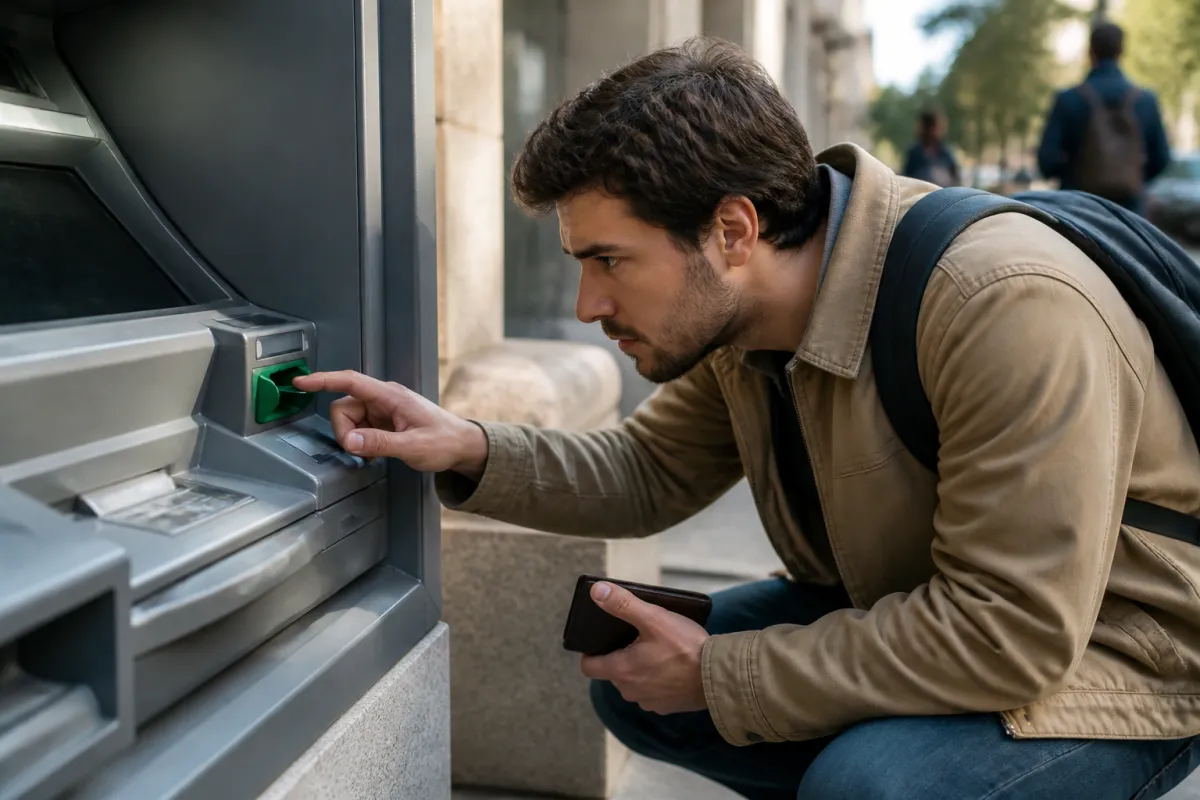
Checking for card skimmers to protect financial information.
Navigate
Card skimming on ATMs is increasing, with a 20% rise in reported incidents in early 2023 compared to the previous year, affecting around 120,000 cards. Users can protect themselves by visually and physically inspecting ATMs for any irregularities before use. The first step is to look for anything loose, crooked, or damaged on the ATM.
What You Gain
Increased Awareness of Skimming Risks
Understanding the rising trend of card skimming attacks, particularly on bank-owned ATMs, enables users to be more vigilant and cautious when using these machines.
Practical Detection Techniques
Users will learn specific visual and physical inspection methods to identify potential skimming devices, enhancing their ability to protect themselves.
Knowledge of Incident Statistics
Access to recent statistics, such as the 20% increase in reported skimming incidents and the 120,000 compromised cards in 2023, provides context for the severity of the issue.
Understanding Liability Limits
Information about the Electronic Funds Transfer Act (EFTA) clarifies consumers' liability for unauthorized transactions, helping users understand their rights.
Awareness of Preventive Measures
Readers will discover alternative payment methods, such as contactless payments, that can mitigate the risk of card skimming.
Insights into Regulatory Requirements
Knowledge of banks' obligations to provide adequate security at ATMs informs users about the standards they should expect when using these services.
Card Skimmer on ATM: Detection Tips
- Options
- Visual Inspection
- Price
- Free
- Timeframes
- Before each use
- Requirements
- Look for loose, crooked, or damaged parts
- Limitations
- Not effective if skimming device is well-hidden
- Options
- Physical Inspection
- Price
- Free
- Timeframes
- Before each use
- Requirements
- Physically check card slot and surrounding area
- Limitations
- May not detect devices inserted deep inside
- Options
- Using Contactless Payment Methods
- Price
- Varies by provider
- Timeframes
- At the time of transaction
- Requirements
- Requires compatible card or device
- Limitations
- Not all ATMs support contactless payments
- Options
- Bank Security Measures
- Price
- Varies by bank
- Timeframes
- Ongoing
- Requirements
- Banks must comply with consumer protection rulings
- Limitations
- Effectiveness depends on bank's implementation of security measures
How to Detect Card Skimmers on ATMs
Inspect the ATM
Before using an ATM, visually and physically inspect it for anything loose, crooked, or damaged. Pay attention to the card reader and keypad, as skimming devices are often inserted deep inside the card read slot and are usually impossible to detect from the exterior.
Use Contactless Payment Methods
Consider using contactless payment methods when available, as they can help mitigate the risk of card skimming. This approach reduces the need to insert a card into the ATM, thus avoiding potential skimming devices.
Monitor Your Bank Statements
Regularly check bank statements for any unauthorized transactions. If any suspicious activity is noticed, report it to the bank immediately. Under the Electronic Funds Transfer Act (EFTA), liability for unauthorized transactions is limited to $50 if reported within two business days.
Report Suspicious Activity
If an ATM appears compromised or if unauthorized transactions occur, report the incident to the bank and local authorities. This action can help prevent further fraud and assist in investigations.
Stay Informed About Local Trends
Be aware of local trends in ATM skimming incidents. For instance, states like Virginia, Texas, New Jersey, Florida, and Colorado have reported at least a 50% year-over-year rise in skimming incidents during the first half of 2023.
Wait for Bank Response
After reporting any suspicious activity, wait for the bank's response regarding the investigation and potential reimbursement. The timeline can vary, but banks are required to provide adequate security at ATMs to avoid fraud.
Educate Yourself on Skimming Techniques
Stay informed about common skimming techniques and devices. Understanding how scammers operate can help in identifying potential threats and protecting personal information.
Risks, Limitations, and Liabilities
Card skimming poses significant risks, particularly as incidents have increased by 20% in early 2023 compared to the previous year, with approximately 120,000 cards compromised (1). Visual and physical inspections of ATMs are essential; however, this method may not be effective if the skimming device is deeply hidden within the card reader (2).
Consumers should be aware that while the Electronic Funds Transfer Act (EFTA) limits liability for unauthorized transactions to $50 if reported within two business days, this protection is contingent upon timely reporting (3). Delays in reporting can lead to increased financial exposure. Additionally, while using contactless payment methods can reduce the risk of skimming, not all ATMs support this feature, which limits its applicability (4).
It is crucial to monitor bank statements regularly for any unauthorized transactions. If suspicious activity is detected, immediate reporting to the bank is necessary to initiate an investigation and potential reimbursement. The response time from banks may vary, and their effectiveness in preventing fraud depends on compliance with security mandates (5). Understanding these limitations and risks is vital for consumers aiming to protect themselves from card skimming attacks.
Explore More ATM Security Resources
Discover additional tips and insights to protect yourself.
View More ArticlesRead next
 Clone Credit Card: How It Happens and Prevention TipsLearn how clone credit cards are created and discover effective prevention tips to protect your finances from fraud.
 What Does a Credit Card Skimmer Look Like?Discover what a credit card skimmer looks like and learn how to identify these devices to protect yourself from fraud.
 Credit card skimmer detectorDiscover effective credit card skimmer detectors to protect your finances from fraud. Learn how to choose the right tool for your needs.
 Card Cloning Software Free: Is It Safe?Explore the risks and implications of using free card cloning software, including potential fraud and legal consequences.